
James I was King of Scots from 1406 until his assassination in 1437. The youngest of three sons, he was born in Dunfermline Abbey to King Robert III and Annabella Drummond. His eldest brother David, Duke of Rothesay, died under suspicious circumstances while detained by his uncle, Robert, Duke of Albany. James's other brother, Robert, died young. Concerns for James's safety deepened in the winter of 1405–1406 prompting plans to send him to France. In February 1406, James took refuge in the castle of the Bass Rock in the Firth of Forth after his escort was attacked by supporters of Archibald, 4th Earl of Douglas. He remained there until mid-March when he boarded a vessel bound for France. On 22 March, an English vessel captured the ship and delivered James to Henry IV of England. The ailing Robert III died on 4 April and the 11-year-old James, now the uncrowned King of Scotland, would remain in captivity for eighteen years.

The House of Stuart, originally spelled Stewart, was a royal house of Scotland, England, Ireland and later Great Britain. The family name comes from the office of High Steward of Scotland, which had been held by the family progenitor Walter fitz Alan. The name Stewart and variations had become established as a family name by the time of his grandson Walter Stewart. The first monarch of the Stewart line was Robert II, whose male-line descendants were kings and queens in Scotland from 1371, and of England, Ireland and Great Britain from 1603, until 1714. Mary, Queen of Scots, was brought up in France where she adopted the French spelling of the name Stuart.

Robert Stewart, Duke of Albany was a member of the Scottish royal family who served as regent to three Scottish monarchs. A ruthless politician, Albany was widely regarded as having murdered his nephew, the Duke of Rothesay, and brother to the future King James I of Scotland. James was held in captivity in England for eighteen years, during which time Albany served as regent in Scotland, king in all but name. He died in 1420 and was succeeded by his son, Murdoch Stewart, Duke of Albany, who was executed for treason when James returned to Scotland in 1425, almost causing the complete ruin of the Albany Stewarts.
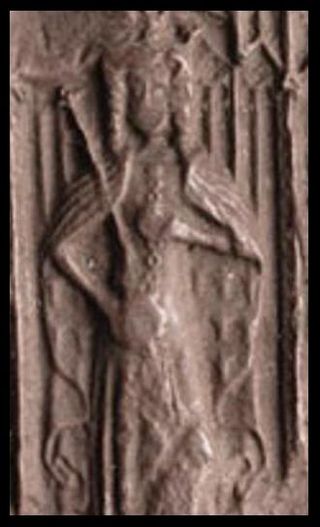
Murdoch Stewart, Duke of Albany was a leading Scottish nobleman, the son of Robert Stewart, Duke of Albany, and the grandson of King Robert II of Scotland, who founded the Stewart dynasty. In 1389, he became Justiciar North of the Forth. In 1402, he was captured at the Battle of Homildon Hill and would spend 12 years in captivity in England.

Sir Ewen Cameron of Lochiel was a Scottish soldier and the 17th Chief of Clan Cameron. He fought as a Cavalier during the Civil War and was one the principal Jacobite leaders during the 1689 Rising. He is regarded as one of the most formidable Scottish clan chiefs of all time, with Lord Macaulay praising him as the "Ulysses of the Highlands". An incident demonstrating his strength and ferocity in single combat, when he bit out the throat of an enemy, is used by Sir Walter Scott in Lady of the Lake.

A Legend of Montrose is an historical novel by Sir Walter Scott, set in Scotland in the 1640s during the Wars of the Three Kingdoms. It forms, along with The Bride of Lammermoor, the 3rd series of Scott's Tales of My Landlord. The two novels were published together in 1819.

Isabella of Lennox was the ruler of Lennox, at least from 1437 to 1458, and last in the line of Mormaers or native Scottish rulers. As the wife of Murdoch Stewart, 2nd Duke of Albany, she was also Duchess of Albany (1420–1425), but in 1425 her family would be almost completely destroyed when her husband, father and two sons were executed by King James I of Scotland because of their rebellion. Only one son, James the Fat, would escape their family's punishment, and he would die in exile in Ireland. Isabella succeeded in escaping the fate of her family, and would eventually regain her title and estates, retiring to her castle in Loch Lomond where she raised her grandchildren. She would eventually live to see the assassination of her family's opponent, King James. Though none of her four sons survived her, her grandson Andrew Stewart, 1st Lord Avandale would in time rise to become Lord Chancellor of Scotland.

Loch Achray is a small freshwater loch 11 km (6.8 mi) west of Callander in Stirling district, Scotland.

Walter Stewart, Earl of Atholl, Strathearn and Caithness was a Scottish nobleman, the son of Robert II of Scotland. Stewart advocated for the ransom and return to Scotland of the future king in exile, James I, in 1424. In 1425 he served as a member of the jury of 21 which tried and executed his nephew Murdoch Stewart, 2nd Duke of Albany. Eventually, however, Atholl turned against the King and conspired in his assassination in 1437. He was tried for murder and was executed after three days of torture.

Lochearnhead is a village in Perthshire on the A84 Stirling to Crianlarich road at the foot of Glen Ogle, 14 miles north of the Highland Boundary Fault. It is situated at the western end of Loch Earn where the A85 road from Crieff meets the A84.

Alexander of Islay or Alexander MacDonald was a medieval Scottish nobleman who succeeded his father Domhnall of Islay as Lord of the Isles (1423–1449), later rising to the rank of Earl of Ross (1436–49). His lively career, especially before he attained the earldom of Ross, led Hugh MacDonald, the 17th century author of History of the MacDonalds, to commemorate him as "a man born to much trouble all his lifetime". Alexander allied himself with King James I of Scotland against the power of the Albany Stewarts in 1425 but, once the Albany Stewarts were out of the way, Alexander quickly found himself at odds with the new king. War with King James would initially prove Alexander's undoing, and would see the King's power in Scotland greatly increased, but at the Battle of Inverlochy Alexander's army prevailed against the forces of the King. Alexander died in 1449, having greatly extended his family's landed wealth and power. He was buried, not in the Isles of his ancestors, but at Fortrose Cathedral in his mainland Earldom of Ross.

Clan Stewart is a Scottish Highland and Lowland clan. The clan is recognised by Court of the Lord Lyon; however, it does not have a clan chief recognised by the Lord Lyon King of Arms. Because the clan has no chief it can be considered an armigerous clan; however, the Earls of Galloway are now considered to be the principal branch of this clan, and the crest and motto of The Earls of Galloway's arms are used in the Clan Stewart crest badge. The Court of the Lord Lyon recognises two other Stewart/Stuart clans, Clan Stuart of Bute and Clan Stewart of Appin. Stuart of Bute is the only one of the three clans at present which has a recognised chief.
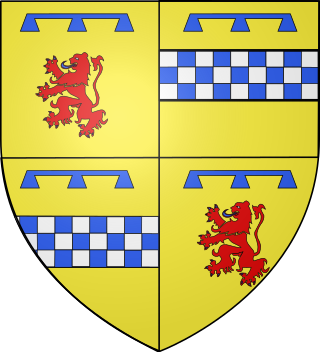
James Mor Stewart, called James the Fat, was the youngest son of Murdoch Stewart, Duke of Albany and Isabella of Lennox. When his father and brothers were executed by King James I for treason in 1425, James led a rebellion against the king, taking the town of Dumbarton and killing the keeper of Dumbarton Castle. His success was short lived and he soon fled to Ireland, where he would spend the remainder of his life in exile. A second attempt at rebellion in 1429 saw a fleet sail to Ireland to collect James "to convey him home that he might be king", but he died before the attempt could be made.

Major John Alexander MacLaren Stewart, 14th of Ardvorlich was a Scottish military officer, historian and the author of several authoritative works on the history of various Scottish clans.

Andrew Stewart was Lord Chancellor of Scotland from 1460 to 1482 and one of the leading servants of King James III of Scotland.

Argaty is a farm estate located just over a mile northeast of Doune, Stirling, Scotland. The present Argaty House dates from the 19th century with baronial additions in the 1860s and 1920s, but was largely destroyed by fire in April 2011.
Sir William Stewart (c.1440–c.1500), 2nd Laird of Baldorran, 1st Royal Bailie of the Crown lands of Balquhidder, was a fifteenth-century Scottish landowner, and founder of the Balquhidder Stewart clan. He was the grandson of James Mhor Stewart who launched a failed bid for the Crown of Scotland in 1429.
Stewart of Balquhidder is a Perthshire branch of the Stewart clan and scions of the royal House of Stewart from an illegitimate branch. They are descended from Sir William Stewart of Baldorran, who was the great grandson of Murdoch Stewart, Duke of Albany, executed by King James I of Scotland for treason in 1425. Murdoch Stewart was himself the grandson of King Robert II of Scotland, who founded the Stewart dynasty.

George Steuart Hume, also known as George Home, was a Maryland physician and landowner who emigrated to Scotland before the American Revolutionary War. Born George Hume Steuart in Maryland, he left for Scotland in 1758, where he studied medicine, changing his name to his maternal name of Hume in order to inherit his family's substantial Scottish estates.
Walter Stewart, 3rd Laird of Baldorran, 2nd Bailie of Balquhidder, was a sixteenth-century Scottish landowner, and the ancestor of the Ardvorlich, Annat, and Glenfinglas Stewarts.


